The Role of Commentators in eSports
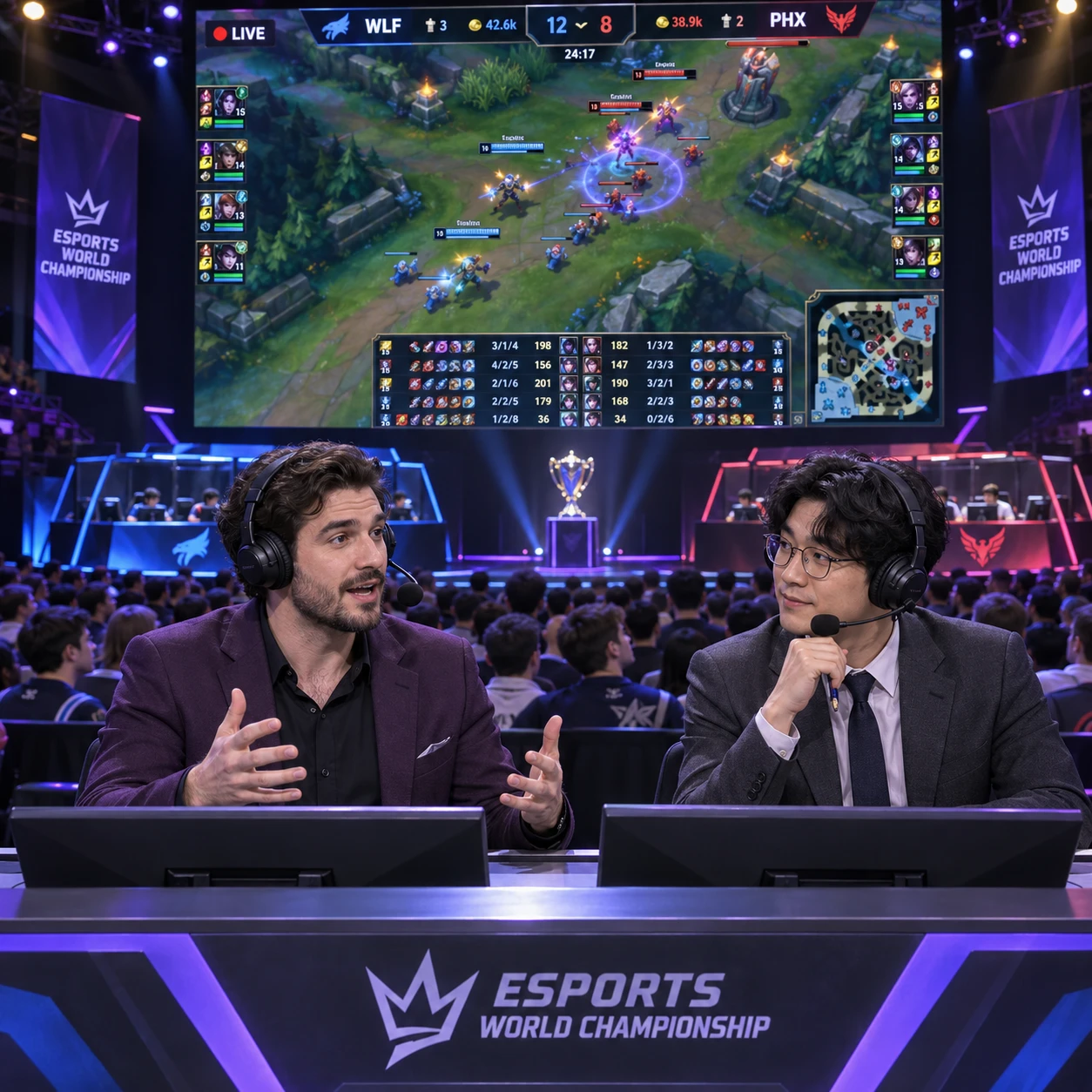
During a close eSports match, a single fight can change the momentum, the strategy, and what viewers expect to happen next. Commentators help audiences keep up with those shifts. They explain the action as it unfolds, add context, and make live match coverage understandable whether someone has followed the game for years or is watching for the first time.
What eSports Commentators Do
eSports commentators narrate live matches, explain important moments, and help viewers understand what is happening and why it matters. Often called shoutcasters, they connect fast-moving gameplay to the audience watching at home or in the arena.
In a game such as League of Legends, Counter-Strike 2, or Valorant, several events may happen at once: players reposition, objectives become available, and a team commits to a fight. A commentator identifies the key action, tracks who is involved, and gives viewers enough context to follow the consequences. Good coverage distinguishes a routine move from a turning point without drowning the broadcast in detail.
The role also changes with the pace of a match. During a lull, commentators can explain team compositions, player roles, or tournament stakes. When the action accelerates, concise narration takes priority. Their job is to make the match clearer and more engaging, not to influence the players or determine the result.
Play-by-Play and Color Commentary
Play-by-play commentary describes the immediate action, while color commentary explains its strategic meaning. Together, they give viewers both a clear account of what just happened and a reason to care about it.
The play-by-play commentator serves as the broadcast’s real-time guide. They name the players, call eliminations or objectives, and keep the sequence of events coherent. This role requires quick reactions and careful timing: a call that arrives too late can miss the excitement, while one that comes too early may describe an outcome that has not yet happened.
Color commentators, often called analysts, focus on tactics and decisions. They might explain why a team gave up map control, how a resource advantage could shape the next round, or why a player’s position made an attack possible. The strongest analysis stays grounded in what the match shows rather than presenting speculation as fact.
- Play-by-play: What is happening right now?
- Color commentary: Why did it happen, and what could it mean next?
These roles may overlap, and some broadcasts use a single commentator. In a two-person team, however, the division helps keep the call lively without sacrificing explanation.
Skills and Preparation Behind the Broadcast
eSports commentators need strong game knowledge, clear communication, and preparation tailored to the teams and tournament. They also coordinate with the broadcast crew so their analysis matches what viewers can see on screen.
Preparation starts with the game itself. Commentators study rules, maps, character or agent abilities, competitive strategies, and recent updates that may affect play. They review team histories, player roles, tournament formats, and recent results. This research helps them recognize a meaningful choice in real time instead of treating every play as a surprise.
Communication skills matter just as much. A commentator must speak clearly under pressure, pronounce player names correctly, manage pacing, and avoid talking over a partner during a decisive moment. They also need to know when to pause. A brief silence can let a dramatic play register; constant speech can flatten the moment.
Before and during a broadcast, commentators coordinate with producers, observers, and other crew members. The observer controls which part of the game appears on screen, while production may provide statistics, replays, or interview segments. The team works best when the commentary follows the visual evidence and corrects course quickly if the broadcast angle changes.
A practical preparation routine often includes checking patch notes, confirming tournament pronunciations and format, reviewing likely matchups, and agreeing on roles with the co-caster. The trade-off is that deep research takes time, and no amount of preparation can predict every in-game decision.
How Commentary Shapes the Viewing Experience
Commentary shapes the viewing experience by building tension, explaining tactics, and giving new fans a way into a complex game. It can make a match easier to follow, though it cannot replace clear visuals or a well-produced broadcast.
For experienced fans, commentators can point out small details that are easy to miss: a player saving a key ability, a team baiting an opponent into a bad position, or a risky choice to contest an objective. These observations add depth without assuming that every viewer has the same level of knowledge.
For newer viewers, short explanations are often more useful than a full lesson on game mechanics. A caster might explain that a team is playing for time or that losing a particular objective could limit its options. That context helps a first-time audience understand the stakes before the next fight begins.
Tone matters, too. Excitement can amplify a close finish, but credibility depends on matching the delivery to the moment. If every minor play is called as a historic upset, the audience may stop trusting the emphasis. Skilled commentators vary their pace and energy, letting the match provide some of the drama.
Commentary and eSports Betting Coverage
In eSports betting coverage, commentary can help viewers follow match developments and understand why a live market may change. It offers context, not betting advice, and it cannot guarantee or determine an outcome.
During a live match, a team may lose a key player, secure an unexpected objective, or reveal a change in strategy. Commentators can explain what that event means within the game. Viewers following betting markets may find this context useful when interpreting a shift in available odds or market expectations, particularly if they are less familiar with the title.
However, commentary is not a substitute for checking the market details. Prices can change quickly, and different markets may use different rules for settlement. A caster’s reaction describes the match; it does not confirm how a bookmaker will settle a bet or predict what happens next. Broadcast delay can also mean that a viewer’s screen and a market feed do not update at exactly the same time.
Keep the roles separate: commentators explain gameplay, while betting operators display and manage their markets. Viewers should assess information independently, check the rules and timing of any market they use, and avoid treating excitement or confidence on-air as a signal of likely success.
Challenges and Changing Expectations
eSports commentators face the challenge of describing fast gameplay accurately while staying impartial and adapting to different games and audiences. The speed and complexity that make a match exciting can also make mistakes easy to broadcast.
A fight may be decided in seconds, with several players acting across multiple screens or areas of a map. Commentators can miss a detail, misidentify a player, or call an outcome before it is certain. Correcting an error promptly is better than repeating it. When the broadcast angle does not show the full action, careful wording helps avoid overstating what can be verified.
Impartiality matters in tournament coverage. A commentator can celebrate an impressive play without appearing to favor one team, and should distinguish observation from opinion. This is especially important when fans follow live markets: an enthusiastic call should not sound like a promise about the next result.
Expectations also shift from game to game. Each title has its own vocabulary, rhythm, competitive history, and audience. A caster who excels in a tactical shooter may need different research and pacing for a strategy game. Broadcasts must also balance veteran fans’ appetite for detail with newcomers’ need for clear explanations. That balance takes judgment, not a script.
Frequently Asked Questions
What is an eSports commentator called?
An eSports commentator is commonly called a shoutcaster. The term describes someone who calls competitive video-game matches, including live tournaments and online broadcasts.
What is the difference between a shoutcaster and an analyst?
A shoutcaster is a broad term for an eSports broadcaster who comments on a match. In a broadcast team, the play-by-play caster calls the immediate action, while the analyst or color commentator explains strategy and context. Some people perform both roles.
How do eSports commentators prepare for a match?
They study the game, tournament format, teams, players, recent strategies, and relevant updates. They also coordinate with their broadcast partner and production team, and confirm details such as player names and pronunciations.
Can commentary influence how viewers interpret a betting market?
Yes. Commentary can explain match events that viewers may connect to a market’s changing expectations. It does not set market prices, guarantee an outcome, or replace checking the market’s rules and timing.