eSports Tournaments with the Biggest Prize Pools
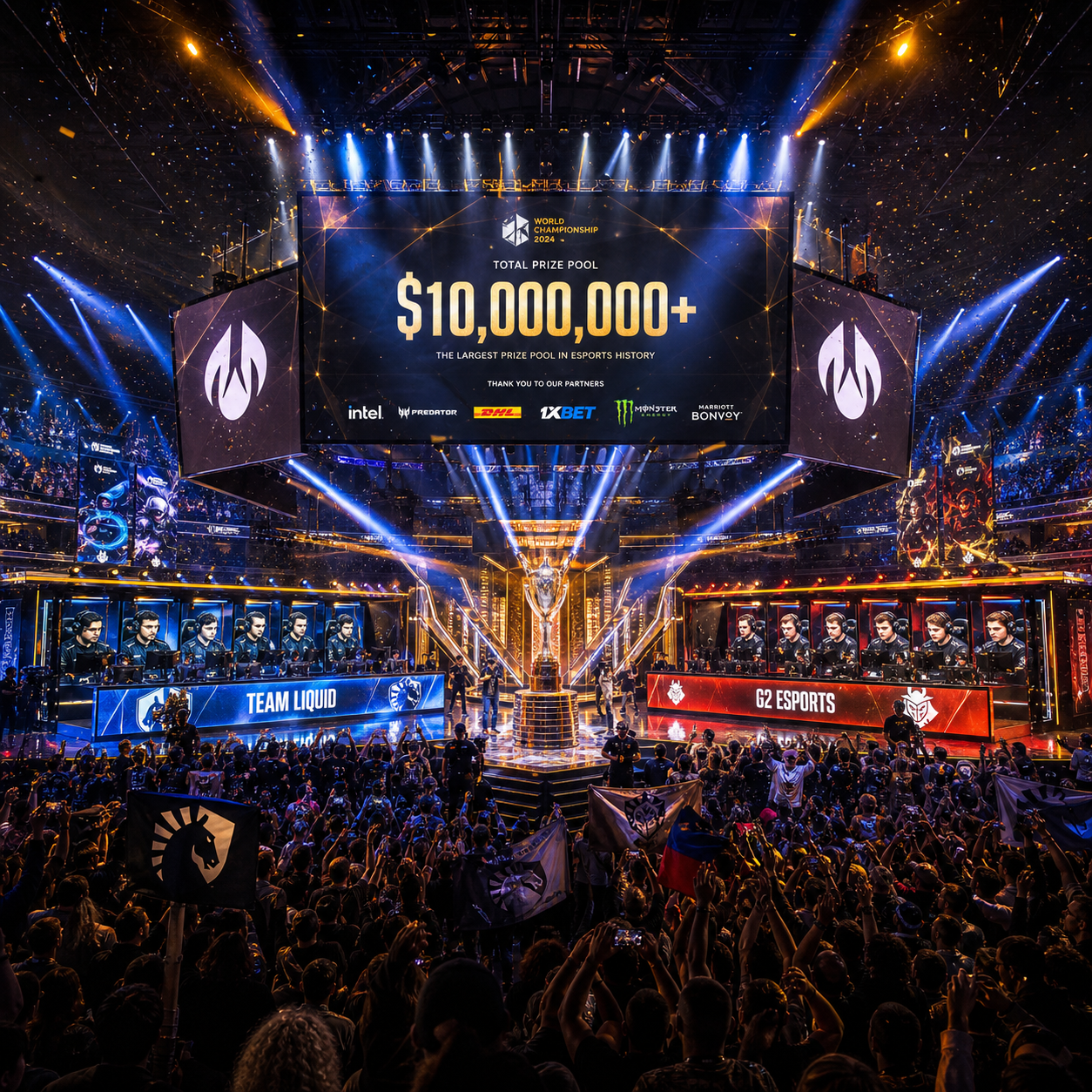
eSports tournaments have developed into major global sporting events, with elite players competing for millions of dollars, championship titles, and long-term recognition. The biggest prize pools are usually associated with flagship competitions such as The International, the League of Legends World Championship, the Fortnite World Cup, and the Esports World Cup.
Prize money attracts attention from fans, teams, sponsors, and eSports betting markets. However, the headline figure does not tell the whole story. Funding models, qualification rules, team contracts, roster changes, and payout structures all affect how valuable an event is to players and bettors.
What Makes an eSports Tournament’s Prize Pool Big?
An eSports tournament has a large prize pool when publisher funding, sponsorship income, ticket sales, media rights, and community contributions combine to create substantial total rewards. The amount can change considerably between editions, so the event year and official announcement should always be checked.
Game publishers often provide the financial foundation for major competitions. They may add direct support, pay production costs, or guarantee minimum prize money. Sponsors contribute through advertising, branded activations, equipment partnerships, and broadcast exposure. Ticketing and hospitality revenue can also support the event, although these sources rarely explain the entire prize pool on their own.
Some games use a community-funded model. Players purchase digital items, battle passes, or special event content, with a stated portion of the revenue added to the tournament fund. This approach became strongly associated with Dota 2 and The International, where community spending historically caused the prize pool to grow beyond the publisher’s initial contribution.
Prize distribution matters as much as the total. A tournament may advertise a huge pool but spread it across dozens of placements, regional stages, coaching staff, or side competitions. Compare:
- Total prize pool: the full amount allocated to the event.
- Winner’s prize: the amount awarded to the champion or winning roster.
- Team and player shares: the money each competitor actually receives after contractual deductions.
- Additional rewards: bonuses for qualification, fan votes, MVP awards, or regional performance.
The eSports Tournaments Known for the Biggest Prize Pools
The International, the Esports World Cup, the Fortnite World Cup, and leading League of Legends events are among the competitions most associated with large eSports prize pools. Their formats differ, which makes a simple ranking unreliable when editions use different currencies, funding systems, or event structures.
| Tournament | Game or games | Format | Prize-pool model | Betting relevance |
|---|---|---|---|---|
| The International | Dota 2 | Global team championship | Publisher support plus community-linked funding in some editions | Strong interest around qualification, groups, and playoffs |
| League of Legends World Championship | League of Legends | Regional qualification followed by global stages | Publisher funding, sponsors, and event revenue | Deep match markets and extensive team data |
| Fortnite World Cup | Fortnite | Individual and duo competition | Publisher-funded event model | Specialist markets with greater volatility |
| Esports World Cup | Multiple games | Club-based multi-title festival | Event organization, sponsors, publishers, and club rewards | Broad schedule, but game-specific analysis is essential |
| Counter-Strike 2 majors | Counter-Strike 2 | Open qualification and elimination stages | Publisher, organizer, sponsorship, and community-related revenue | Regular match volume and detailed pre-match markets |
The event with the highest advertised total is not automatically the most prestigious. Competitive history, broadcast reach, player quality, cultural importance, and consistency also matter. For betting purposes, a smaller but stable tournament can offer more usable information than a huge event with uncertain rosters.
The International and Dota 2’s Prize Pool Model
The International is Dota 2’s premier global championship, and its prize pool became famous for growing through community-supported digital sales. That model helped make The International one of the defining prize-money stories in eSports.
In editions using a crowdfunding mechanism, Valve supplied the tournament framework while a portion of revenue from in-game items or seasonal content increased the final fund. The result could be a substantial difference between the initial base amount and the final published prize pool. Changes to item sales, battle-pass design, event timing, and publisher policy can therefore affect the total from one year to the next.
The International uses team-based competition, meaning the winner’s award is generally allocated to a roster rather than a single player. A five-player lineup may also include coaches, substitutes, analysts, and support personnel whose arrangements depend on team policy and contracts.
For fans and bettors, Dota 2 requires attention to draft strategy, patch changes, hero pools, side selection, and the route each team took through qualification. A large prize pool can increase motivation, but pressure can also produce conservative play or unexpected strategic choices.
Major Prize-Pool Events in League of Legends, Fortnite, and Other Games
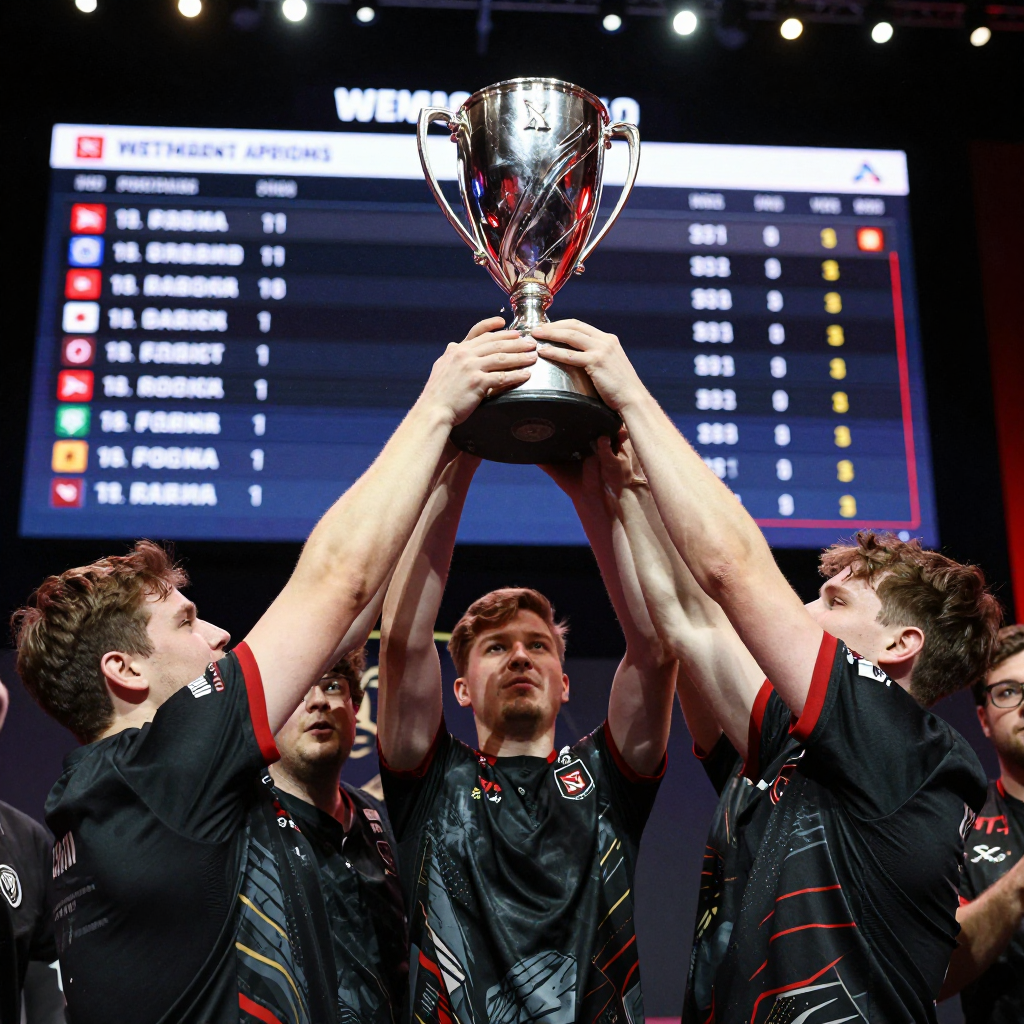
League of Legends, Fortnite, Counter-Strike 2, and multi-game festivals offer different forms of high-value competition. Their prize pools should be compared alongside format, player field, qualification path, and audience rather than viewed as isolated numbers.
League of Legends World Championship
The League of Legends World Championship brings together leading regional teams from leagues such as the LCK, LPL, LEC, and LCS. Its structure normally includes play-in or preliminary stages, group-style competition, and knockout rounds, although the exact format can change. The event benefits from a huge global audience and a mature professional ecosystem.
For eSports betting, League of Legends offers extensive pre-match information. Analysts can study champion priority, objective control, gold differences, side selection, recent schedule strength, and best-of-five performance. The prize pool is only one part of the competitive picture.
Fortnite World Cup
The Fortnite World Cup became notable for its exceptionally large rewards, including competitions for solo players and duos. Its format differs sharply from traditional team-based competition because placement points, eliminations, consistency, and lobby strength can all influence the final standings.
This creates a different betting environment. Player form can be difficult to measure, and short-format matches may produce more variance than a long series. A competitor with a strong average placement may still lose an outright market because of one poor game or an unusually aggressive lobby.
Esports World Cup and Counter-Strike 2
The Esports World Cup uses a multi-title structure and includes club-level rewards alongside individual game tournaments. That broadens its global reach, but bettors must separate the club competition from the prize pool for a specific game.
Counter-Strike 2 majors remain important because they combine open qualification routes, historic teams, elimination pressure, and a large international audience. Team form, map pools, veto decisions, and roster stability often matter more than the headline purse when assessing a match.
How Prize Money Is Distributed to Teams and Players
Prize money is usually paid according to final placement, then divided among teams and players under tournament rules and private contracts. The champion may receive the largest share, while lower-ranked teams receive progressively smaller awards or participation payments.
In team-based competition, the organizer commonly pays the registered organization. The organization may then distribute money according to player contracts. A contract might specify equal player shares, performance bonuses, coach allocations, substitute payments, or deductions for expenses. Those terms are not always public.
Qualification rewards can also be separate from the main prize pool. Teams may earn money for reaching a regional final, winning a qualifier, or securing a place at the main event. Some tournaments provide travel support or accommodation rather than cash, which can reduce the financial burden without appearing in the headline prize figure.
Individual games create different payout structures. A Fortnite solo winner may receive an award directly, while a Dota 2 or Counter-Strike 2 champion competes as part of a roster. Before comparing player earnings, check whether the published figure is gross prize money, a team award, or the competitor’s contractual share.
Why Big Prize Pools Matter for eSports Betting
Big prize pools increase attention, media coverage, and betting-market availability, but they do not guarantee easier predictions or better returns. Tournament scale can improve the amount of information available while also increasing pressure and volatility.
Large events usually attract more bookmakers and more market types, including match winners, map handicaps, correct score, series totals, outright champion, and sometimes player performance markets. A long schedule may also create live-betting opportunities. Market availability varies by country, operator, game, and local regulation.
Prize money can influence motivation, especially for a team fighting through an elimination bracket or trying to secure a future invitation. Yet motivation is difficult to quantify. A heavily favored roster may be adapting to a new patch, managing fatigue, or playing with a substitute. A smaller team may have strong preparation but limited experience on a major stage.
Use a practical MAP check before wagering: Market quality, meaning whether the odds and rules are clear; Actual competitive factors, including rosters, maps, patches, and recent opponents; and Personal limits, covering age requirements, bankroll boundaries, and legal availability. Never treat a large prize pool as a betting tip, and avoid claims of guaranteed winnings.
How to Follow High-Value eSports Tournaments
To follow high-value eSports tournaments effectively, check the official schedule, format, roster list, qualification route, patch rules, and bookmaker markets before evaluating the event. These details often change the meaning of recent results.
- Confirm the current edition and official prize-pool announcement.
- Read the tournament format, including group rules, tiebreakers, map selection, and elimination conditions.
- Track roster changes, substitutes, coaching changes, travel schedules, and visa issues.
- Check the game patch or version used during the event.
- Compare the qualification path and strength of opponents faced by each team.
- Review bookmaker settlement rules, market limits, start-time conditions, and regional restrictions.
Official tournament websites, publisher announcements, and recognized competition organizers are the best sources for schedules and regulations. A useful reference point for general eSports history is the Wikipedia overview of esports, but current prize pools and betting rules should come from the event organizer and licensed operator.
Common mistakes include treating an old record as a current fact, comparing a team event with a solo event without adjusting for roster size, and ignoring format changes. Another frequent error is betting on a famous team without checking its current lineup. Fame creates attention; it does not replace analysis.
Frequently Asked Questions
Which eSports tournament has had the biggest prize pool?
The International has historically recorded some of the largest single-event eSports prize pools, especially during editions supported by community-funded digital sales. The record can change, so verify the edition and official figure before making a comparison.
How are eSports tournament prize pools funded?
Funding can come from publishers, sponsors, ticketing, media rights, merchandise, entry fees, and community purchases of in-game content. The exact mix depends on the game and organizer.
Do players keep all of their tournament winnings?
No. A player’s final share depends on team contracts, bonuses, taxes, agent arrangements, and any agreed division with coaches or substitutes. The advertised prize is usually a gross award.
Which games offer the largest eSports prizes?
Dota 2, League of Legends, Fortnite, Counter-Strike 2, and games featured in the Esports World Cup have all hosted major prize-money events. The ranking varies by edition and funding model.
Are tournaments with bigger prize pools better for eSports betting?
Not necessarily. Bigger events usually offer more markets and data, but they can also bring intense pressure, patch uncertainty, roster disruption, and tighter odds. Evaluate the competition itself and wager only where permitted and within responsible limits.